
South Africa's Department of Science, Technology and Innovation (DSTI) has launched the WRIGHT initiative at Mangosuthu University of Technology (MUT), a program aimed at building women's research careers and leadership roles. Deputy Minister Nomalungelo Gina unveiled the effort, framing it as part of a broader push to connect gender equity with the country's innovation pipeline.
What WRIGHT Aims to Do
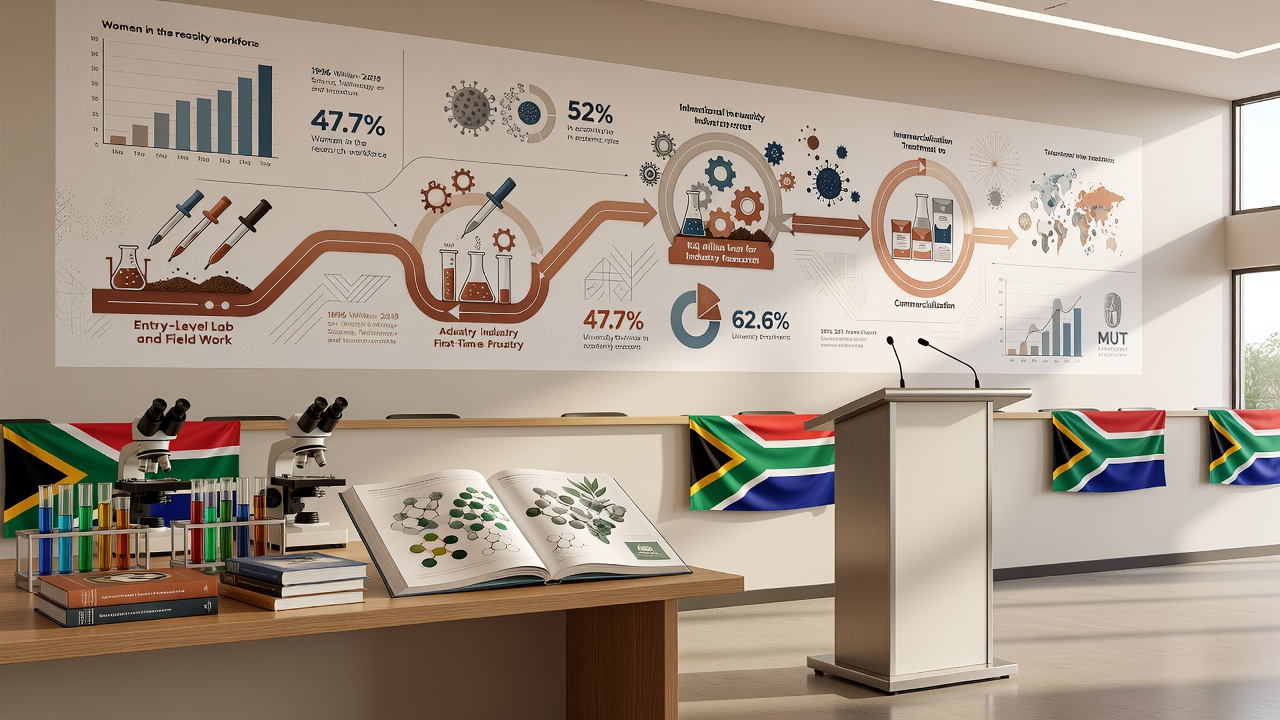
The initiative targets a long-standing gap between women's participation in research and their advancement into leadership positions. Gina emphasized that universities of technology serve a distinct function in the research ecosystem: they translate laboratory and field work into industry processes, products and services. Placing WRIGHT within this kind of institution, she said, ensures women are positioned at every stage of that pipeline, not just in entry-level research roles.
The launch coincides with MUT's broader effort to expand its research infrastructure, including a R2 million investment directed at first-time researchers, plans for a multidisciplinary research journal, a research conference and the "MUT in Research" program.
The Numbers Behind the Push
According to the 2023/24 National Survey of Research and Experimental Development, women make up 47.7% of South Africa's research workforce, 52% of the academic workforce and 62.6% of university enrollments, with roughly 45% of scientific publication authorship. Gina noted that these figures, while encouraging, do not automatically translate into equal access to leadership or advancement opportunities. Globally, by comparison, women represent only 31% to 33% of researchers, a share that has barely shifted over the past decade - underscoring that South Africa's workforce participation numbers are comparatively strong even as leadership gaps persist.
Policy Roots and Practical Goals
The initiative builds on commitments made in South Africa's 1996 White Paper on Science and Technology, which called for eradicating gender disparities in the sector, and the 2019 White Paper on Science, Technology and Innovation, which reaffirmed inclusivity and transformation as policy priorities. Gina also pointed to weaknesses in South Africa's patenting and commercialization performance, suggesting that strengthening the path from research to market application is a parallel goal alongside gender equity.
As an example of what structured support can produce, Gina cited Professor Naidoo, whose work on tuberculosis and HIV has informed treatment strategies internationally and who has trained more than 100 students, 89% of them women.
What Comes Next
Gina asked the WRIGHT Steering Committee to build partnerships across career stages and share lessons with the wider research system. The initiative's practical impact will depend on how its mentorship, funding and leadership-track mechanisms are implemented at MUT and whether similar models extend to other universities of technology. No specific targets, timelines or funding figures for WRIGHT itself were disclosed at the launch.