
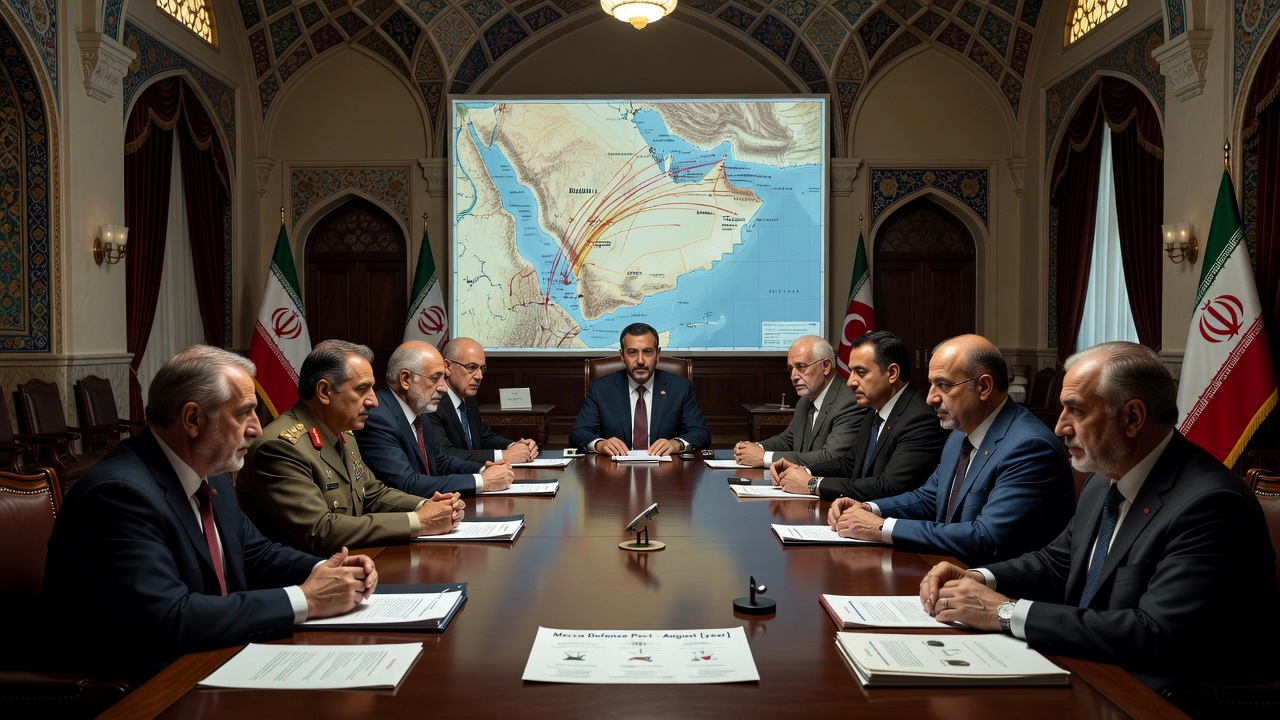
Top officials from Saudi Arabia, Pakistan and Turkey arrived in Tehran on Monday for their first joint high-level talks with Iranian leaders since Houthi attacks on Saudi territory intensified and Washington renewed warnings of possible military action against Iran. The trip puts an untested regional defense pact, and a fragile mediation effort, under immediate strain.
A defense pact under pressure
Saudi Defense Minister Khalid bin Salman, Pakistani army chief Asim Munir and Turkish intelligence chief Ibrahim Kalin traveled to Tehran, according to Reuters, which cited Saudi and Iranian officials. Ali Bagheri Kani, deputy secretary of Iran's Supreme National Security Council, confirmed the visit. The idea reportedly emerged during Munir's earlier trip to Tehran last week, when he met Iranian President Masoud Pezeshkian.
The meeting is the first time representatives of all three signatories to the Mecca defense pact have engaged Iran together since hostilities escalated. Saudi Arabia, Pakistan and Turkey signed that agreement in August, committing that an attack on one member would be treated as an attack on all three. Pakistan has ratified the pact; ratification in Turkey's parliament is still pending. Earlier this month the three countries agreed to move toward implementation, including rapid deployment of personnel and military capabilities to Saudi Arabia if needed.
Renewed Houthi attacks test the agreement
The talks follow a reported increase in Iran-backed Houthi missile and drone attacks on Saudi Arabia, including a wave Saudi authorities said they intercepted on Sunday. Saudi Deputy Foreign Minister for Public Diplomacy Raed bin Khalid Qarmali said the visit aims to reduce hostilities and reinforce mediation led by Qatar and Pakistan. Qatari officials also held separate talks in Tehran on Sunday.
Previous Qatari-Pakistani mediation produced a temporary halt in hostilities that later collapsed when fighting resumed, underscoring how fragile prior arrangements have proven.
Wider US-Iran tensions
Indirect contacts between Tehran and Washington have continued through the same mediators, a process Iranian Foreign Minister Abbas Araghchi has referenced publicly. Iranian media reported that officials told Munir that Tehran would not negotiate directly with Washington until its demands are met. President Donald Trump raised the possibility of renewed US military action against Iran on Friday, and Iranian officials have warned that any further strike would draw a stronger response.
For Saudi Arabia, the priority is shielding its infrastructure from spillover violence. The Tehran visit shows how closely intertwined Gulf security, the new defense pact and the unresolved US-Iran standoff have become, though it remains uncertain whether the talks will yield a durable de-escalation.