
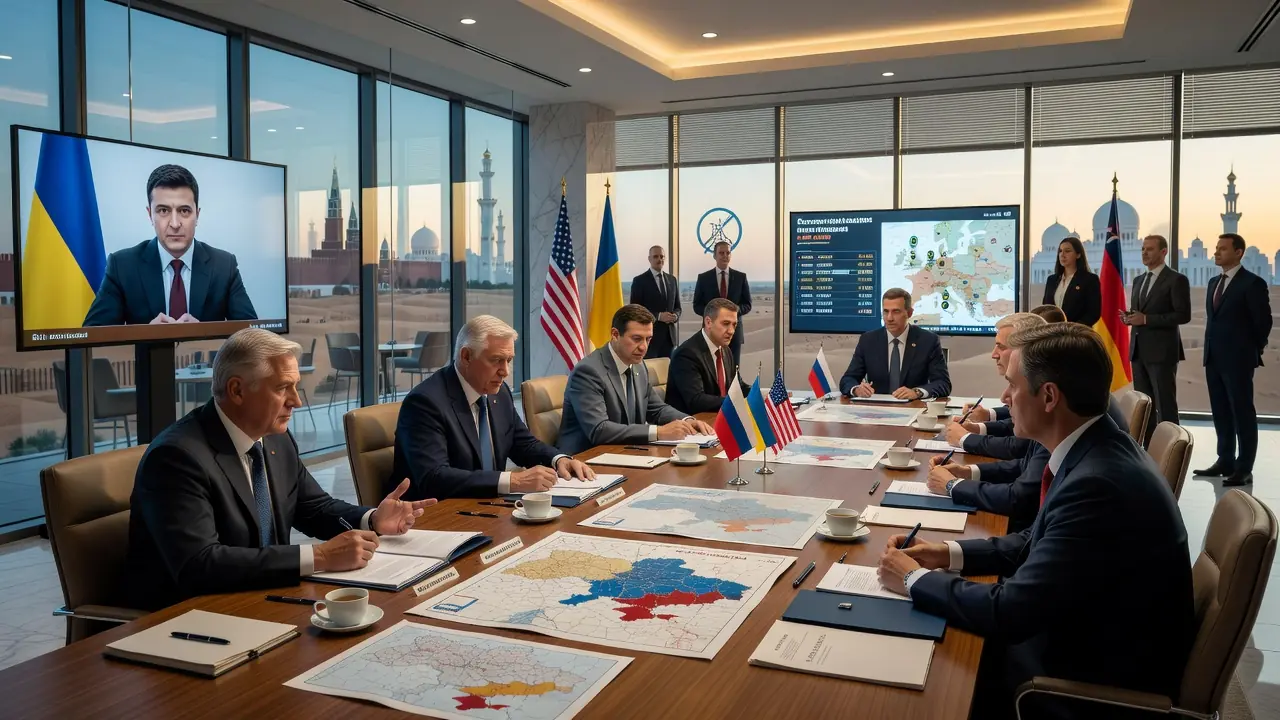
Negotiators from Russia, Ukraine, and the United States concluded two days of trilateral talks in Abu Dhabi on November 10-11 with a tentative agreement on a large prisoner exchange, while leaving the core disputes over territory and security guarantees unresolved. The session, the first of its kind since earlier this year, also opened a new discussion track on broader European security arrangements, though officials on all sides described the overall progress as limited.
A Narrow but Real Agreement
US officials told RFE/RL that the agreement in principle on a prisoner swap was a genuine achievement, even as deep mistrust between Kyiv and Moscow persisted. Ukrainian President Volodymyr Zelenskyy, speaking in Dublin on November 11, said the exchange could involve 1,000 to 1,500 people on both sides, though he reiterated Kyiv's preference for an all-for-all release. Ukraine's chief negotiator, Rustem Umerov, said the two days allowed both sides to state their positions directly but confirmed that "significant differences remain." Russia's negotiator, Vladimir Medinsky, ruled out territorial exchanges as part of any settlement, and Zelenskyy said Moscow's delegation rejected a proposed energy cease-fire, claiming it lacked a mandate to discuss it.
Why the Gap Persists
Analysts consulted by RFE/RL offered converging explanations for the stalemate. Slawomir Debski of the College of Europe in Natolin said neither side currently sees a peace settlement that secures its core interests at a lower cost than continued fighting. Paul Saunders of the Center for the National Interest called the progress "largely symbolic," arguing Russian President Vladimir Putin still believes Moscow can prevail in a war of attrition given Russia's size and economic weight, and that negotiations let the Kremlin appear cooperative while avoiding pressure from Washington. Former US Ambassador James Gilmore offered a partly different view, suggesting Ukrainian strikes on Russian infrastructure and economic strain may be pushing Moscow toward a negotiated outcome rather than a costlier military campaign. Both analysts agreed, however, that Russia's willingness to talk does not indicate readiness to abandon its objectives.
Europe's Uncertain Place at the Table
A notable shift in Abu Dhabi was Washington's growing focus on wider European security arrangements, not just Ukraine's immediate fate. US officials said proposals are being developed with partners to strengthen Ukraine's long-term security and contribute to continental stability, and that Washington hopes to bring Moscow into a multilateral format. Envoys Steve Witkoff and Jared Kushner were scheduled to travel to Moscow on November 12 to meet Putin before heading to Dublin to brief Zelenskyy. Britain, France, Germany, NATO, and the European Commission have so far remained outside the core trilateral talks, a point of concern for Kyiv, which fears decisions about its territory could be shaped without its full participation. NATO Secretary-General Mark Rutte said the US, Ukraine, and European allies remain "completely aligned and united," but stressed that Russia must show genuine willingness to engage.
What Comes Next
US officials say postwar security guarantees cannot be finalized until territorial and bilateral disputes are settled, leaving Kyiv without firm assurances before any decisions on occupied land. Zelenskyy said Ukraine needs "very concrete answers" on guarantees from the United States rather than Russia. The Moscow and Dublin meetings this week will indicate whether the Abu Dhabi talks produce further concrete steps or remain, as some experts caution, a diplomatic holding pattern.