
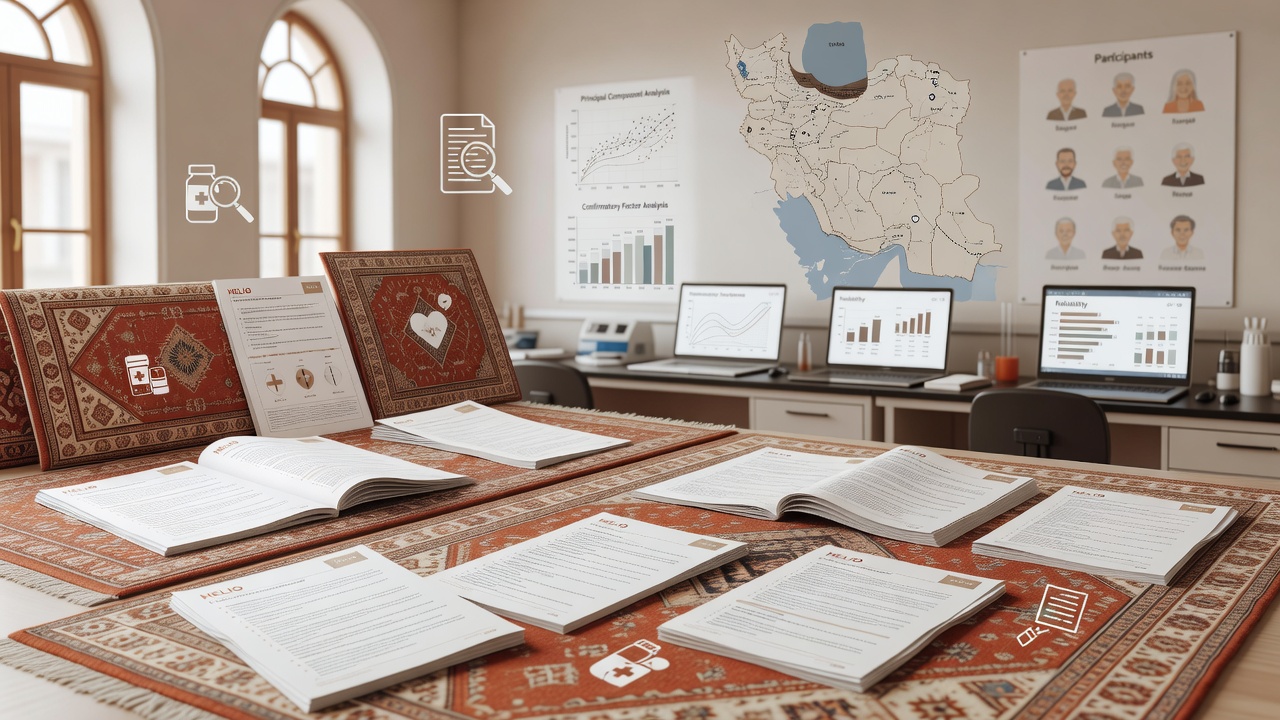
Researchers in Iran have tested a 28-item tool designed to measure health literacy specifically among older adults living in their own communities. The instrument, called HELIO, was adapted from an existing adult health literacy survey and evaluated in a study of 495 people, showing strong statistical reliability as a complete measure.
Why a Separate Tool for Older Adults
Health literacy-the ability to find, understand and use health information to make decisions-becomes especially important as people age and often manage multiple chronic conditions. An existing instrument, the Health Literacy Instrument for Adults (HELIA), was already in use in Iran, but researchers noted it had never been specifically tested for accuracy among older populations. To close that gap, the team adapted the tool into HELIO and tested it among community-dwelling older adults rather than those in nursing homes or other institutional settings.
Study participants were recruited through a two-stage cluster sampling method and had an average age of 64.87 years. Slightly more than half, 53.8%, were women. After an initial content-validity review, researchers removed five items from the original instrument, arriving at the final 28-item HELIO scale.
How the Tool Was Tested
The research team split participants into two groups for complementary statistical analyses: 247 people for principal component analysis and 248 for confirmatory factor analysis. The principal component analysis supported retaining the same five-factor structure as the original adult instrument, with those five factors together explaining 35.9% of the variance in responses.
Statistical checks indicated the data were well suited to this kind of analysis, and the confirmatory model produced strong fit indicators, including a comparative fit index and Tucker-Lewis index of 0.99 each. The overall scale demonstrated high internal consistency, with a Cronbach's alpha of 0.94 and McDonald's omega of 0.95 - both well above conventional thresholds for a reliable instrument.
What the Results Do and Don't Show
The study's authors concluded that HELIO is an acceptable, reliable way to assess health literacy among Persian-speaking older adults living independently in Iran. However, they cautioned that not every individual subscale within the tool met standard reliability criteria, meaning the strongest evidence applies to HELIO as a whole instrument rather than to each of its component sections.
It's worth noting what this research does not establish. This was a validation study of a measurement tool, not a test of any health program or intervention. It does not show that using HELIO improves health decisions, clinical outcomes or quality of life for older adults. The researchers themselves flagged a need for further cross-cultural validation before the instrument could be considered broadly applicable beyond the Iranian, Persian-speaking population studied here.