
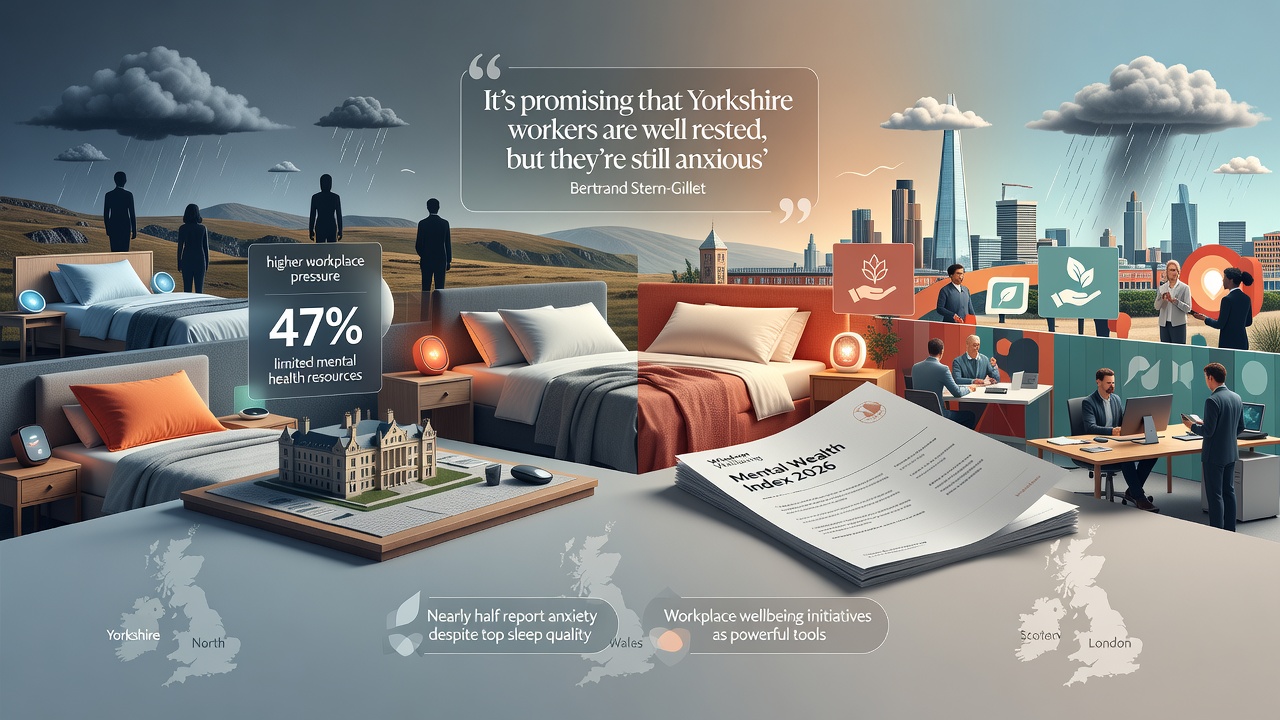
A new wellbeing survey finds a paradox among full-time workers in Yorkshire: although they get more sleep than employees anywhere else in Britain, 47 percent still say they feel anxious. The findings come from the Mental Wealth Index 2026, a report published by employee wellbeing firm Wisdom Wellbeing, and point to a gap between physical rest and mental health that experts say workplaces are not yet addressing.
What the data shows
The Mental Wealth Index 2026 surveyed full-time workers across Britain and found a notable regional split. Yorkshire workers topped the rankings for sleep quality, yet nearly half still reported persistent anxiety. By contrast, London employees reported the lowest anxiety levels and the greatest optimism about the year ahead. Workers in the North more broadly, along with those in Wales and Scotland, reported higher workplace pressure and more limited access to employer-funded mental health resources than their counterparts in the capital.
Why rest alone may not be enough
Bertrand Stern-Gillet, chief executive of Wisdom Wellbeing, said the results show that good sleep habits do not automatically protect against anxiety. "It's promising that Yorkshire workers are well rested, but they're still anxious," he said. "While getting enough sleep is crucial for both mental and physical health, the effects of anxiety could be offsetting the good rest." He added that full-time workers in the region "could benefit from workplace wellbeing support, to reduce their anxiety and help even more to reach their sleep goals."
The case for workplace wellbeing programs
Stern-Gillet described workplace wellbeing initiatives as "one of the most powerful tools a business can invest in," arguing that early support can stop personal or professional strain from escalating into a full crisis. He said such measures can reduce absenteeism and help employees perform closer to their potential during the workday. The report's authors frame the regional gap in access to employer-provided mental health resources as a structural issue, not simply a matter of individual coping strategies.
What this means for employees and employers
The findings suggest that sleep quality and anxiety should be treated as related but distinct measures of workplace wellbeing, rather than one offsetting the other automatically. For employers, the regional disparities in support access highlighted by the report point to a practical opportunity: expanding mental health resources outside London, where provision appears comparatively limited. As with any single industry survey, the figures describe reported experiences at one point in time rather than a clinical diagnosis of anxiety disorders, and readers experiencing ongoing anxiety are encouraged to seek guidance from a qualified health professional.