
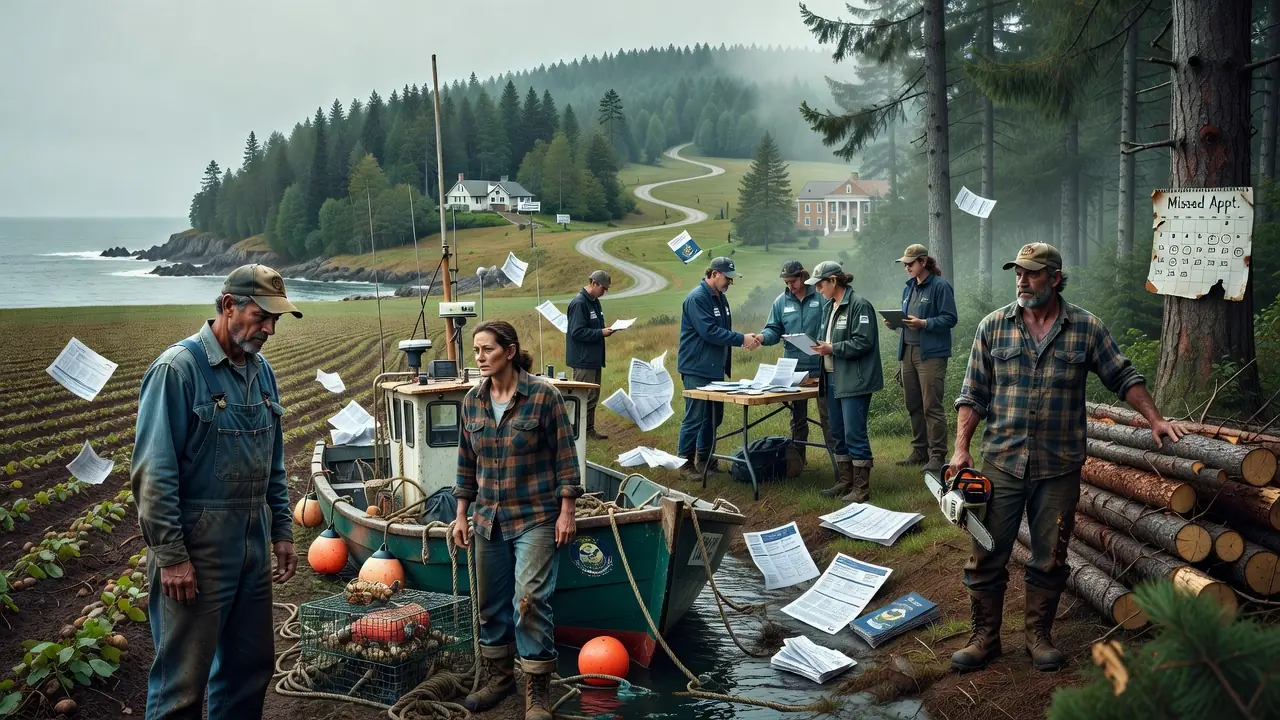
A coalition of Maine state agencies has asked lawmakers to fund a new mental health support program for people working in agriculture, fishing, and logging. The recommendation, submitted in a report to the Maine Legislature, points to survey data showing widespread delays in health care among workers in these industries.
What the Report Found
The report was produced jointly by representatives from Maine's Departments of Agriculture, Health and Human Services, and Marine Resources. It describes the state's farming, fishing, and logging sectors as "heritage industries" facing distinct structural pressures: income that fluctuates with seasons and weather, elevated physical injury risk tied to the work itself, and geographic isolation that limits access to nearby clinics or providers.
According to a survey of several hundred workers in these fields cited in the report, more than half said they had put off getting health care at some point in the past year. The most common reasons given were the cost of care and the difficulty of taking time away from work to seek treatment. Separately, 74% of agricultural workers surveyed identified mental health as a moderate or major concern within their industry.
Proposed Response Modeled on Vermont
Report authors recommended that Maine establish a state-level program similar to one already operating in Vermont. As described in the report, such a program would offer short-term counseling services, help workers enroll in MaineCare (Maine's Medicaid program), and provide mental health screenings conducted directly at worksites rather than requiring workers to travel to a clinic.
The logic behind worksite screening and enrollment assistance is practical: it reduces the number of separate trips or appointments a worker must schedule, which matters for people whose jobs do not easily accommodate time off. Short-term counseling, as opposed to long-term therapy commitments, is also intended to lower the barrier for workers who may be dealing with intermittent stressors tied to harvest seasons, fishing quotas, or logging contracts.
What Remains Uncertain
The report is a recommendation, not an enacted policy. It will now be up to the Maine Legislature to decide whether to fund such a program, and no timeline, budget figure, or implementation date has been specified in the material released so far. It is also not yet clear how closely any eventual Maine program would mirror Vermont's model, or how it would be staffed and administered across the state's rural and coastal regions.
For workers in these industries, the report's findings offer a documented account of barriers to care rather than a guarantee of new services. Readers seeking mental health support in the meantime can consult MaineCare eligibility information or local community health resources, since any new program would take time to design and implement even if the Legislature acts on the recommendation.