
Frequent Users of Digital Health Tools Show Higher Literacy, Portuguese Study Finds
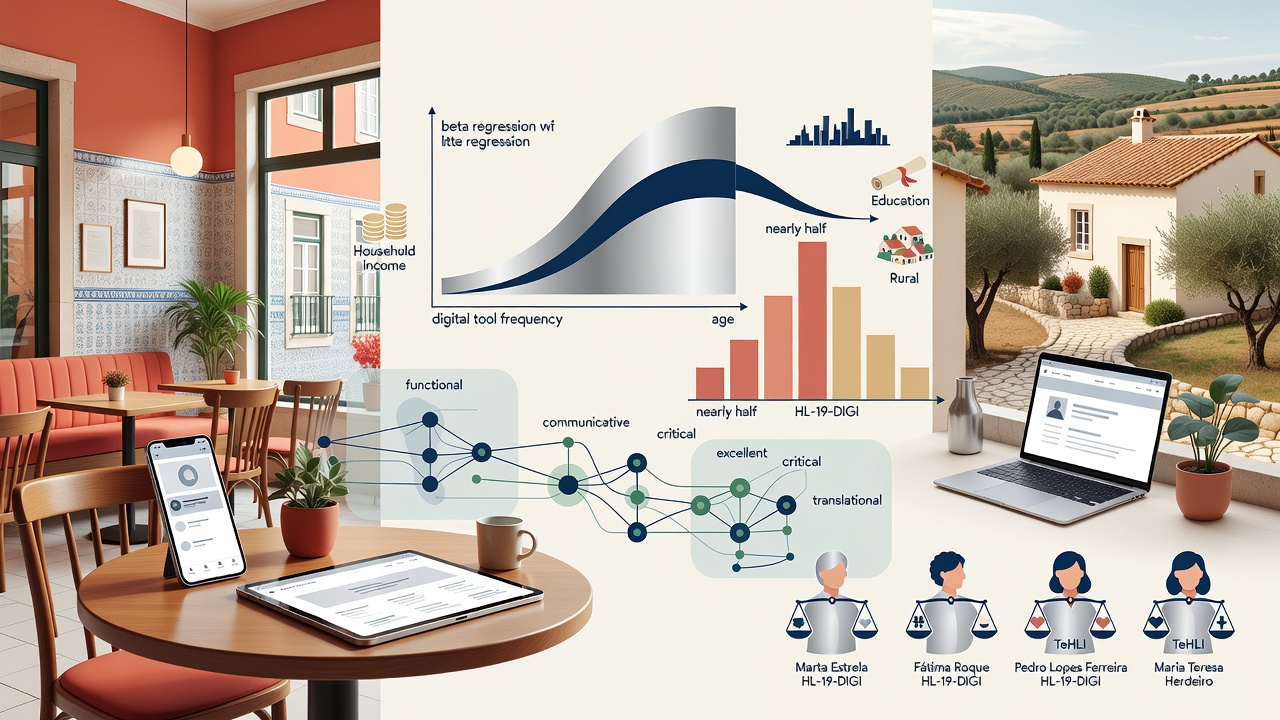
A cross-sectional study of 1,047 Portuguese adults who already use digital health tools found that literacy scores drop steadily with age but rise with frequency of use. Published in Frontiers in Public Health, the research also points to household income, education and place of residence as secondary factors shaping how well people understand and apply digital health information.
How the study measured digital health literacy
Researchers Marta Estrela, Fátima Roque, Pedro Lopes Ferreira, and Maria Teresa Herdeiro surveyed adults who reported using digital health services, combining sociodemographic questions with two validated instruments: the HL-19-DIGI scale and the TeHLI scale. Websites and social media were the most common channels respondents used to find health information or services, reflecting how digital health engagement in Portugal is still concentrated in general-purpose platforms rather than dedicated clinical apps.
On the HL-19-DIGI measure, nearly half of participants scored in the "excellent" range, suggesting that among people who actively use digital health tools, baseline competence is relatively strong. However, the TeHLI scale-which breaks literacy into functional, communicative, critical, and translational dimensions-revealed uneven performance, indicating that people may be comfortable navigating a website without necessarily being able to critically evaluate health content or translate it into action.
Age and usage frequency stand out as key drivers
Using multiple beta regression models, the authors found a consistent inverse relationship between age and digital health literacy: scores declined as respondents got older. At the same time, more frequent use of digital health tools was linked to higher literacy scores, suggesting a reinforcing cycle in which regular engagement builds competence, and competence encourages further use.
Education, income and whether someone lived in an urban or rural area also showed some influence, though the effects were less consistent across models than age and usage frequency. An exploratory analysis identified household income as a factor that can moderate the relationship between digital health literacy and age, gender, or employment status, meaning its effect may depend on which other characteristics a person has.
What this means for policy and practice
The authors argue that pinpointing which sociodemographic factors matter-and how they interact-is essential for designing interventions that are evidence-based and centered on citizens' actual needs, rather than one-size-fits-all digital literacy campaigns. Because the sample included only people already using digital health tools, the findings describe literacy gaps within an engaged population rather than among non-users, a distinction relevant to policymakers in the United States and elsewhere who are expanding telehealth and patient portals. The study underscores that simply providing access to digital health platforms does not guarantee that all age groups or income brackets will use them with equal confidence or critical skill.