
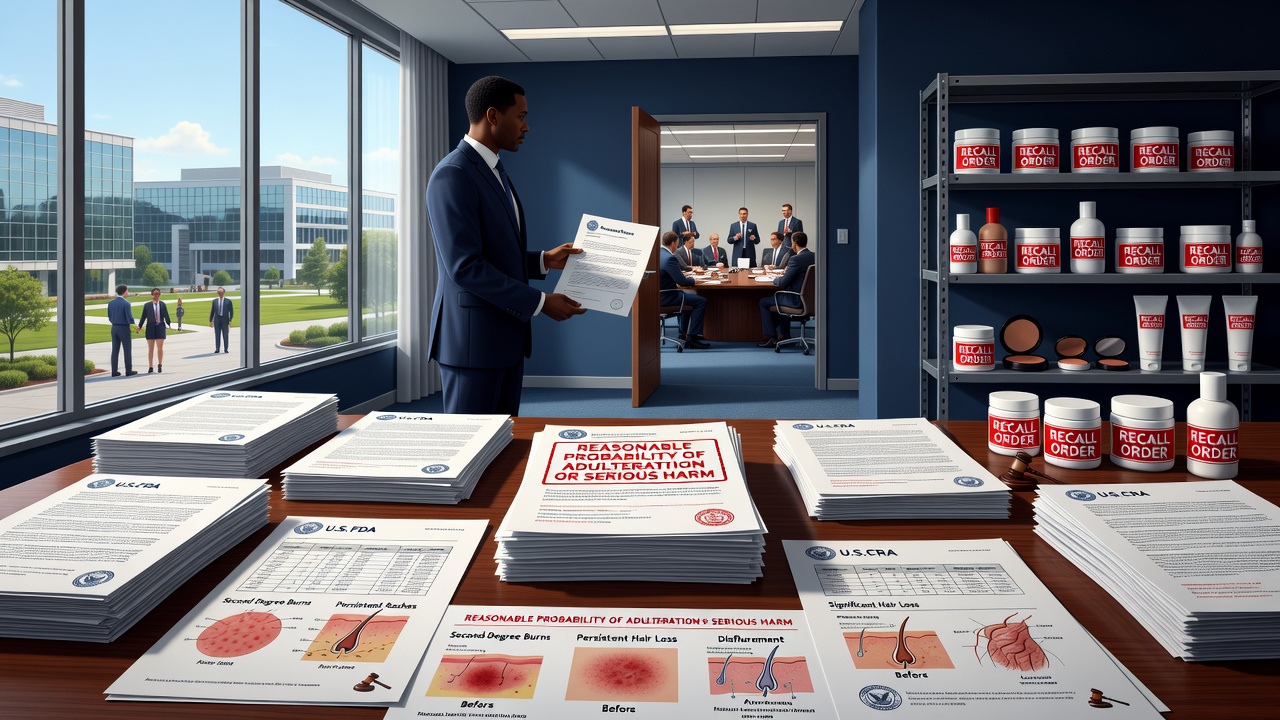
The Food and Drug Administration has finalized guidance explaining exactly how and when it will use its new mandatory recall authority over cosmetics, a power granted under the 2022 Modernization of Cosmetics Regulation Act (MoCRA). The document lays out the evidence standards, notification steps and hearing rights that apply before any company can be ordered to pull a product from the U.S. market.
When the FDA Can Step In
Under the guidance, the agency may order a recall only if it determines there is a "reasonable probability" that a cosmetic is adulterated, misbranded, or likely to cause serious health harm or death. MoCRA defines serious adverse events to include significant disfigurement, persistent rashes, second- or third-degree burns, and significant hair loss. Products regulated as both cosmetics and drugs or devices, such as sunscreens and antiperspirants, fall outside this specific recall authority, though they remain subject to other federal recall powers.
To build its case, the FDA says it will draw on inspection findings, lab analysis of raw materials or finished goods, epidemiological data, adverse event reports, and consumer or trade complaints. It will also factor in whether especially vulnerable users - infants, older adults, pregnant women, or medically compromised individuals - are exposed, and whether the company already declined to act voluntarily.
How the Recall Process Unfolds
The mechanism begins with written notice to the product's "Responsible Person," defined under MoCRA as the manufacturer, packer, or distributor listed on the label. That party is first given a chance to voluntarily halt distribution and remove the product. If the company refuses or fails to act within the FDA's deadline, the agency can order an immediate stop to distribution.
The company then has the right to an informal hearing within 10 days to contest the evidence. Afterward, the FDA Commissioner - the only official authorized to issue or cancel such an order - can lift the order, extend the distribution halt, or expand it into a full recall with a defined timetable and reporting schedule. Companies that ignore a final order risk injunctions or criminal prosecution under the FD&C Act.
Context and Remaining Gaps
The FDA notes that most cosmetics recalls have historically been voluntary and expects that pattern to continue even with the new mandatory authority in place. This guidance follows earlier draft rules issued this year on the agency's power to request and copy company safety records. MoCRA separately requires brands to report serious incidents, including death or significant disfigurement, within 15 days of learning of them.
Notably, the law stops short of proactively banning specific ingredients, a gap that has prompted several U.S. states to pursue their own restrictions on chemicals in cosmetic products.