
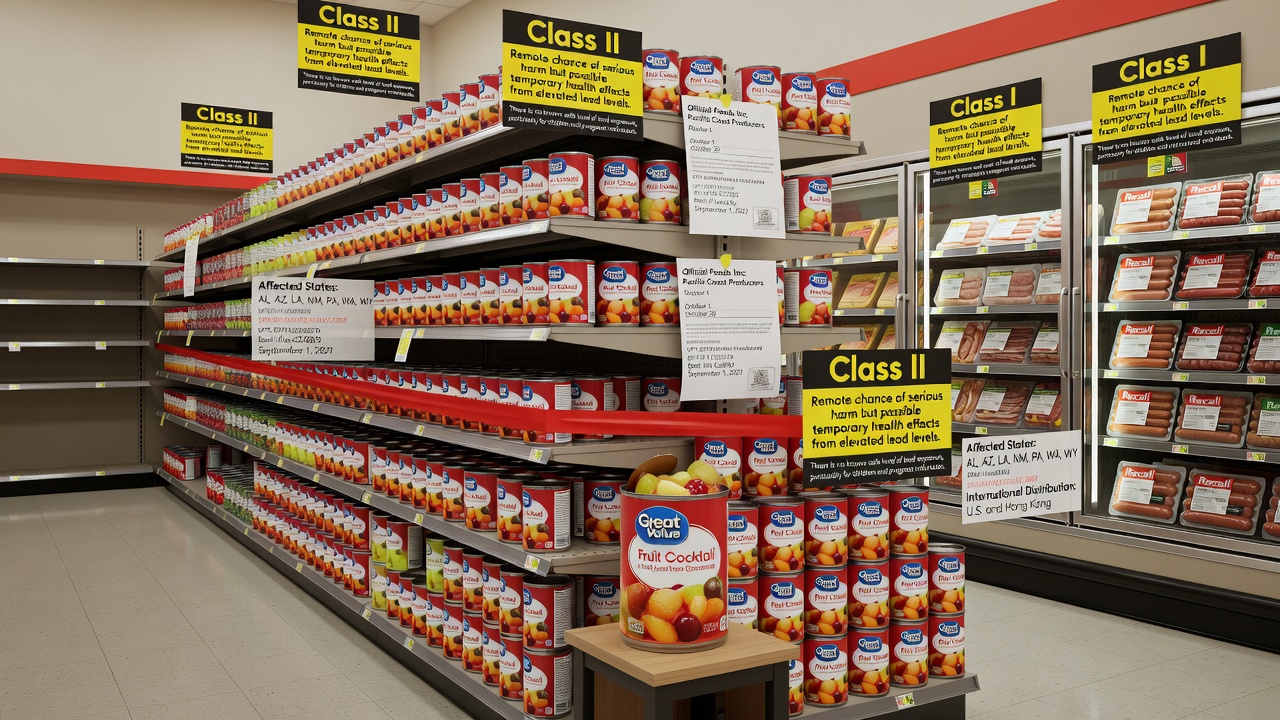
Pacific Coast Producers voluntarily pulled a single lot of Great Value Fruit Cocktail in Fruit Juice from Concentrate on October 1 after detecting the possibility of elevated lead levels. The FDA assigned the action a Class II risk classification on October 20, indicating a remote chance of serious harm but a real possibility of temporary health effects.
What the recall covers
The recall affects more than 44,000 cans - specifically 1,836 cases of 24 cans each - sold in 15-ounce containers under the Great Value brand at Walmart. The implicated lot number is 6FCB 04 C2263, with a best-if-used-by date of September 1, 2027, and UPC 078742369570. Distribution reached seven states: Alabama, Arizona, Louisiana, New Mexico, Pennsylvania, Washington and Wyoming.
Understanding the FDA's risk tier
The FDA organizes recalls into three classes based on severity. Class I covers situations with a reasonable chance of serious injury or death. Class III applies when a violation is unlikely to cause any adverse health reaction. This fruit cocktail recall sits in the middle tier, Class II, meaning exposure could cause temporary or reversible health problems, though serious outcomes are considered unlikely. Even so, the agency is explicit that "there is no known safe level of exposure to lead," a position reflecting how the metal can accumulate in the body over repeated exposures, particularly affecting children and pregnant individuals.
Walmart's response and consumer guidance
A Walmart spokesperson told PEOPLE that the retailer removes recalled products from shelves and blocks sales at registers and online once notified, while coordinating with suppliers investigating the cause. Pacific Coast Producers had not responded to a request for comment at the time of reporting. Consumers who purchased the affected lot should check the code on their can and avoid consuming the product; returning it to the retailer or following any forthcoming manufacturer instructions is the standard precaution in cases like this.
A separate, more severe meat recall
Days earlier, Kayem Foods Inc. recalled over 1.5 million pounds of ready-to-eat meat and poultry - including sausages, bacon, brisket and hot dogs - after a warehouse cooler experienced temperature deviations that could allow bacterial growth. The U.S. Department of Agriculture's Food Safety and Inspection Service classified that recall as Class I, its most serious category, reflecting a reasonable probability of severe illness or death. That recall followed a customer complaint about warm product temperatures and reached retail and foodservice locations in the U.S. and Hong Kong. No illnesses have been confirmed in either the fruit cocktail or the meat recall as of this reporting.