
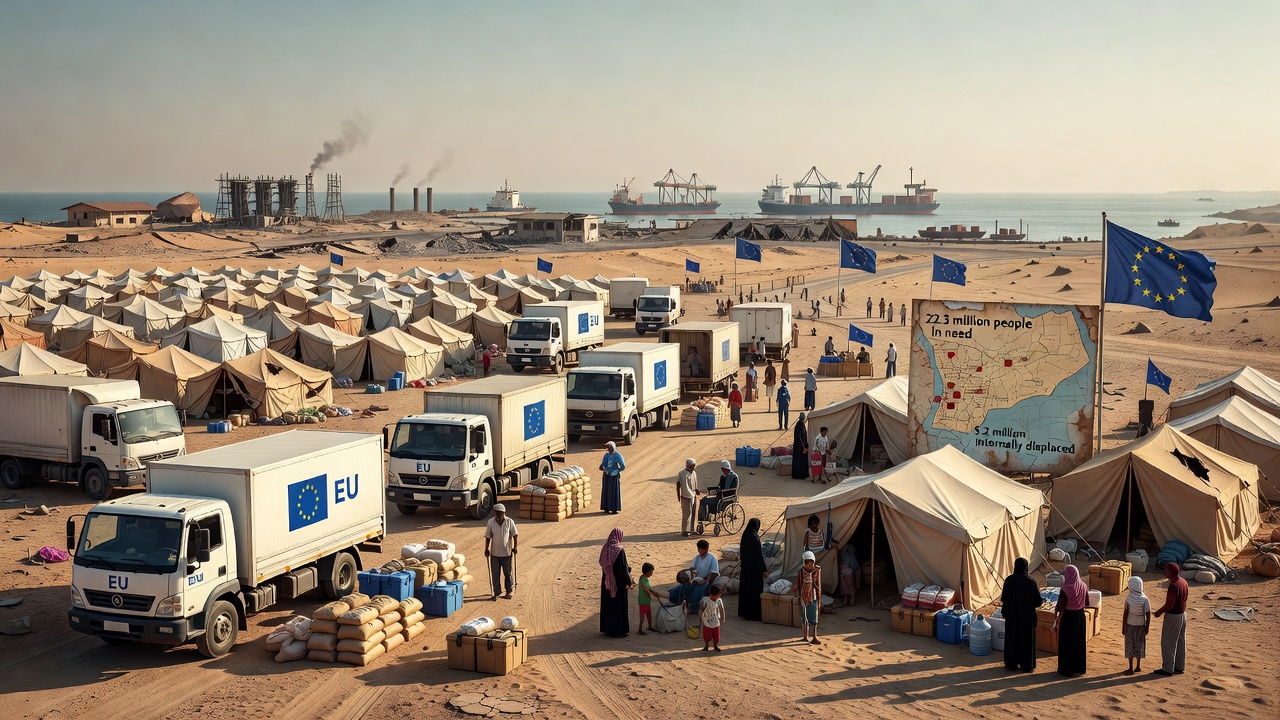
The European Commission has announced an additional €22.5 million in humanitarian funding for Yemen, supplementing the €87.5 million already earmarked for 2026. The move responds to a renewed escalation in Yemen's conflict that has displaced nearly 230,000 people in recent weeks alone and intensified needs among a population already facing severe hardship.
What the new funding targets
According to the European Commission, the additional funds will help humanitarian organizations working in Yemen respond to growing needs, rebuild operational capacity, pre-position essential supplies, and prepare for further deterioration in conditions. Priority areas include food security and nutrition, health care, water and sanitation, and protection services, with specific attention to displaced families, women, children, people with disabilities, and other marginalized groups. The Commission says this funding builds on assistance already delivered throughout 2026 and is designed to reach those most affected by the latest round of fighting.
Scale of humanitarian need
Yemen remains, by the Commission's own characterization, one of the world's most severe and underfunded humanitarian crises. More than a decade of conflict, economic collapse, and the breakdown of basic services have left an estimated 22.3 million people in need of humanitarian assistance and protection. Roughly 5.2 million people are internally displaced, and more than 2.2 million children under five suffer from acute malnutrition, according to figures cited by the Commission. Recent strikes affecting civilian infrastructure-including Sana'a airport, power stations, and Red Sea ports-have added to civilian casualties and disrupted the movement of essential supplies.
Operating constraints on the ground
Humanitarian organizations continue to face interference that hampers their ability to reach people in need, a challenge the Commission describes as a persistent obstacle to aid delivery. The EU says it remains committed to delivering assistance based strictly on need, following the humanitarian principles of humanity, neutrality, impartiality, and independence, while also pressing for stronger protection of human rights and adherence to international humanitarian law. The Commission frames its approach as linking humanitarian relief with longer-term development and peacebuilding efforts, acknowledging that flexibility will remain necessary given the volatility of the situation.
What remains uncertain
The funding announcement does not specify exact timelines for disbursement or which implementing partners will receive allocations. Nor does it offer projections on whether the escalation in fighting will continue or ease in the coming months. The scale of need described by the Commission significantly exceeds the resources currently committed, underscoring the gap between available aid and the humanitarian demands documented across Yemen.